
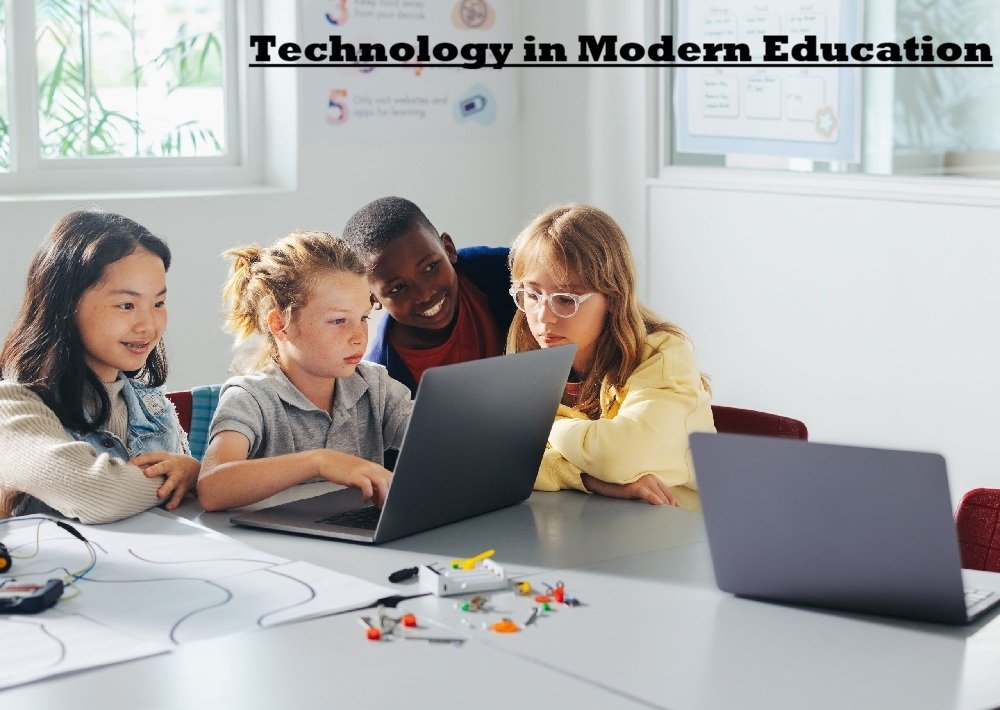
Introduction
Technology has become an integral part of everyday life, and the education sector is undergoing significant changes as a result. Traditional teaching methods are gradually merging with digital devices, online platforms, and interactive learning tools. Today, students can attend online lessons, watch educational films, read digital books, and communicate with teachers via notable learning programs.
Technology in present-day schooling isn’t always a lousy lot using pc structures or smartphones in classrooms. It is about making learning more accessible, exciting, flexible, and effective. Teachers can give an explanation for difficult subjects via shows, animation,s and digital demonstrations, and even as college students can find out instructional resources past their textbooks.
What Is Technology in Modern Education?
Technology in present-day education refers to the use of virtual devices, software programs, network services, and virtual learning resources to enhance education and learning outcomes.
It consists of computer systems, laptops, tablets, interactive whiteboards, academic programs, on line getting to know systems and synthetic intelligence-primarily based gaining knowledge of device.
Read also: Odisha School Teacher Transfer Portal: Online Application, Login, Eligibility and Status Check.
Importance of Technology in Modern Education
Technology plays an important role in improving the quality of education. It gives college college students extra possibilities to examine and lets in teachers to apply specific strategies to offer an motive in the back of complex subjects.
One important benefit is easy get entry to to educational facts. Students are not constrained to the books that are in their colleges or libraries. They can discover online libraries, instructional websites, research materials, and recorded lectures.
Major Uses of Technology in Modern Education
Technology is utilized in wonderful strategies to enhance academic success. Some of its most crucial applications are mentioned below.
1. Online Learning Platforms
Online learning platforms permit college students to learn through the internet. They provide video lessons, virtual notes, assignments, quizzes, and exceptional educational resources.
Students can attend live lectures or watch recorded lectures in keeping with their comfort. This flexibility is particularly useful for beginners who cannot attend normal lecture-room instruction.
2. Smart Classrooms
Smart lecture rooms use digital devices to make lecture room training more interactive. These school rooms may also include projectors, interactive whiteboards, computer systems, and network-connected devices.
Teachers can show videos, instructional films, diagrams, nd animations to provide an aid for special minds.
3. Digital Books and Online Libraries
Digital books have changed the way university students access study materials. Instead of wearing severa heavy textbooks, university college students can keep a couple of books on a tablet, laptop or smartphone.
Online libraries additionally offer get entry to to instructional articles, journals, studies papers and reference substances.
4. Artificial Intelligence in Education
Artificial intelligence, commonly called AI, is becoming increasingly essential in training.
AI-powered learning devices can help college students with subjects, recognize hard subjects and gain custom designed reasons.
For example, an AI-based learning software program may moreover choose out regions in which a student goals additional exercising and endorse appropriate sports activities.
5. Educational Mobile Applications
Mobile programs provide study opportunities through smartphones and tablets.
Students can use instructional apps to improve English vocabulary, strengthen mathematics, study programming, and prepare for competitive examinations.
6. Virtual Reality and Augmented Reality
Virtual reality (VR) and augmented reality (AR) are growing technologies that could create more appealing learning experiences.
reality allows college students to explore simulated environments, even as augmented reality gives digital information to the real-world environment.
Benefits of Technology in Modern Education
Technology offers numerous benefits to college students, instructors,ors and academic institutions.
Better records of subjects: Videos, animations, displays, and interactive demonstrations assist in making tough topics more understandable
Flexible mastering opportunities: Students can get entry to recorded schooling and virtual belongings at to be had times.
Improved communication: Teachers and students can share information through online systems, emails, and educational programs.
Personalised learning: Digital learning tools can provide great learning activities and learning materials in line with character development.
Access to international resources: Students can discover academic resources, lectures, and research from superb international locations.
Development of virtual abilities: Regular use of technology permits college students to become familiar with computer systems, software and online communication.
Time-saving sports activities: Teachers can use virtual tools to organise take a look at substances, put together assessments and manipulate classroom sports activities.
Important Technologies Used in Modern Education
The following table explains a few common technologies and their instructional uses.
| Technology | Uses in Education | Main Benefits |
|---|---|---|
| Computers and laptops | Research, assignments and presentations | Develops digital skills |
| Smart boards | Interactive classroom lessons | Improves understanding |
| Online learning platforms | Online classes and courses | Flexible learning |
| Artificial intelligence | Personalised study assistance | Supports individual learning |
| Digital libraries | Access to books and journals | Provides learning resources |
| Educational apps | Practice and revision | Makes learning convenient |
| Virtual reality | Virtual educational experiences | Supports practical learning |
| Video conferencing | Online meetings and classes | Improves communication |
| Cloud storage | Saving and sharing study materials | Easy access to files |
How Technology Is Changing the Role of Teachers
Technology has changed the obligations of instructors in modern school rooms. Earlier, instructors particularly delivered commands through lectures, textbooks and have a take a look at room discussions.
Today, teachers can integrate conventional teaching strategies with digital tools. They can use shows, online quizzes, instructional videos, nd interactive activities to make lessons more powerful.
The instructor’s characteristic is likewise turning into one more centered on guiding university college students in place of, in fact, supplying facts.
Role of Technology in Students’ Learning Development
Modern instructional technology permits college students to grow their academic knowledge and, in addition, practical skills.
Students can enhance their research capabilities by exploring notable educational internet sites and digital libraries. They can build problem-solving abilities through interactive learning activities and online tasks. Group assignments finished via digital systems can enhance teamwork and verbal exchange.
Challenges of Using Technology in Education
Although technology has many benefits, its use in education also creates certain disturbing conditions.
1. Digital Divide
Not every scholar has access to a laptop, cellphone, or reliable internet connection. Students from economically weaker backgrounds and faraway areas might also moreover face problems having access to on-line training.
2. Distraction During Learning
Smartphones and computer systems offer easy access to educational content; however, they include video games, entertaalso include video games, entertainment applications,ay also lose interest in the event when they use devices without proper guidance.
3. Privacy and Cybersecurity
Educational systems accumulate data about university and college students, which includes names, instructional records, and sports. If this data isn’t always protected well, it may create privacy and safety dangers.
4. Dependence on Digital Devices
Excessive dependence on technology can lessen possibilities for handwriting, face-to-face conversation, and traditional physical activities. A balanced combination of digital and traditional learning methods is essential.
5. Training for Teachers
Some teachers also can moreover find out it hard to use new educational era with out right schooling. Schools want to offer regular training classes so teachers can use digital devices correctly and effectively.
Difference Between Traditional Education and Technology-Based Education
Traditional schooling and technology-based totally completely schooling have incredible strategies, however every can make contributions to powerful reading.
| Traditional Education | Technology-Based Education |
|---|---|
| Mainly uses printed textbooks | Uses digital books and online resources |
| Classroom teaching is central | Supports classroom and online learning |
| Communication is usually face-to-face | Supports digital communication |
| Study materials are often printed | Study materials can be shared electronically |
| Learning mainly follows classroom schedules | May offer flexible learning schedules |
| Uses physical teaching resources | Uses videos, applications and interactive tools |
| Assessments are often paper-based | Supports online quizzes and digital assessments |
Technology in Modern Education in India
India is experiencing widespread growth in virtual schooling. Schools, colleges, universities and training establishments are more and more the use of virtual systems to aid gaining knowledge of.
Government projects have additionally endorsed the use of technology in training.
Some critical examples encompass:
1. DIKSHA Platform: DIKSHA presents digital instructional sources for university students and teachers. It allows get right of get right of entry to to to studying substances all through precise instructional stages.
2. SWAYAM: SWAYAM is a web gaining knowledge of initiative that offers get admission to to instructional courses from faculty-degree learning to better schooling.
3. PM eVIDYA: This initiative helps virtual, on-line and tv-based totally educational assets to beautify get proper of get entry to to to learning.
4. National Digital Library of India: The National Digital Library presents get right of access to to a good sized collection of educational belongings and learning substances.
5. EPathshala: This platform affords get right of entry to to digital textbooks and educational assets for university kids and teachers.
Future of Technology in Modern Education
The future of education will possibly include more integration of virtual systems, artificial intelligence, and interactive learning structures. Artificial intelligence may additionally moreover assist offer greater customized getting to know opinions. Students should keep up with extra physical activities and resources in step with their educational development.
Virtual reality and augmented reality might also emerge as increasingly common in training, treatment, engineering, and educational settings.
Tips for Using Technology Effectively in Education
Students and teachers can get better results in the educational era by following some realistic tips.
- Use trusted instructional net sites and get to know programs.
- Set a set timetable for online learning.
- Avoid pointless cellular notifications at some stage in commands.
- Use virtual property to apprehend principles in place of in fact copying solutions.
- Take regular breaks from screens.
- Protect personal records at the same time as using online resources.
- Combine virtual gaining knowledge of with books, writing and classroom discussions.
- Verify essential facts using reliable educational resources.
- Ask teachers for guidance when a virtual resource creates confusion.
- Use AI tools responsibly and complete assignments with authentic records.
Conclusion
Technology in modern-day education has changed the manner in which college and university students study, teachers train, and academic institutions manage instruction. Digital schoolrooms, online learning systems, educational packages, and artificial intelligence have created new possibilities for gaining access to information and developing crucial capabilities.
Technology makes training more flexible, interactive, and accessible. It permits students to learn subjects beyond traditional textbooks and allows instructors to introduce one-of-a-kind teaching strategies.
Frequently Asked Questions (FAQs)
1. What is technology in present-day training?
Technology in present-day training refers to the use of computers, smartphones, digital systems, artificial intelligence, and other digital equipment to support teaching and learning.
2. What are the key benefits of technology in education?
The major benefits embody flexible studying, clean get right of entry to to facts, interactive instructions, customized studying and stepped forward virtual capabilities.
3. How does technology help teachers?
Technology permits instructors to prepare lessons, share materials, conduct online assessments, and offer an explanation for tough subjects through motion snapshots and displays.
4. What are some examples of educational technology?
Examples include smart boards, laptops, educational packages, online learning platforms, virtual libraries, artificial intelligence, and digital facts.
5. What are the negative elements of generation in education?
Some dangers embody virtual distractions, unequal net get right of get right of entry to to, privateness risks, immoderate display display screen time and dependence on virtual gadgets.
6. What is the destiny of the generation in training?
The future also can encompass extra use of artificial intelligence, customized analysis, virtual lecture rooms, interactive simulations, nd advanced virtual learning systems.
7. Can AI replace instructors inside the schoolroom?
No. Technology can help with training, but instructors stay important for guidance, verbal exchange, motivation, crucial questioning, and college students’ huge improvement.
1 thought on “Technology in Modern Education: Transforming the Future of Learning”